

FIBERGLASS & CELLULOSE ATTIC INSULATION
WHAT'S INYOUR ATTIC?
Need more insulation in your attic? Comfort Shield installs blown-in fiberglass and cellulose to improve thin, uneven, or missing attic coverage.
We serve Fort Smith, the Arkansas River Valley, Northwest Arkansas, and eastern Oklahoma. We inspect what is already in your attic before recommending whether to add more or remove the old material first.
Free estimates • Straight answers • No pressure

START WITH WHAT YOU NOTICE
COULD YOUR ATTIC INSULATION NEED ATTENTION?
These do not prove you need more insulation, but they are good reasons to take a look.
ROOMS STAY TOO HOT OR COLD
Some parts of the house never feel as comfortable as the rest.
YOUR SYSTEM RUNS FREQUENTLY
Heating or cooling seems to work harder than you expect.
COVERAGE LOOKS THIN OR UNEVEN
Framing, bare spots, or disturbed areas are easy to see.
THE DECISION THAT MATTERS MOST
ADD MORE—OR REMOVETHE OLD INSULATION FIRST?
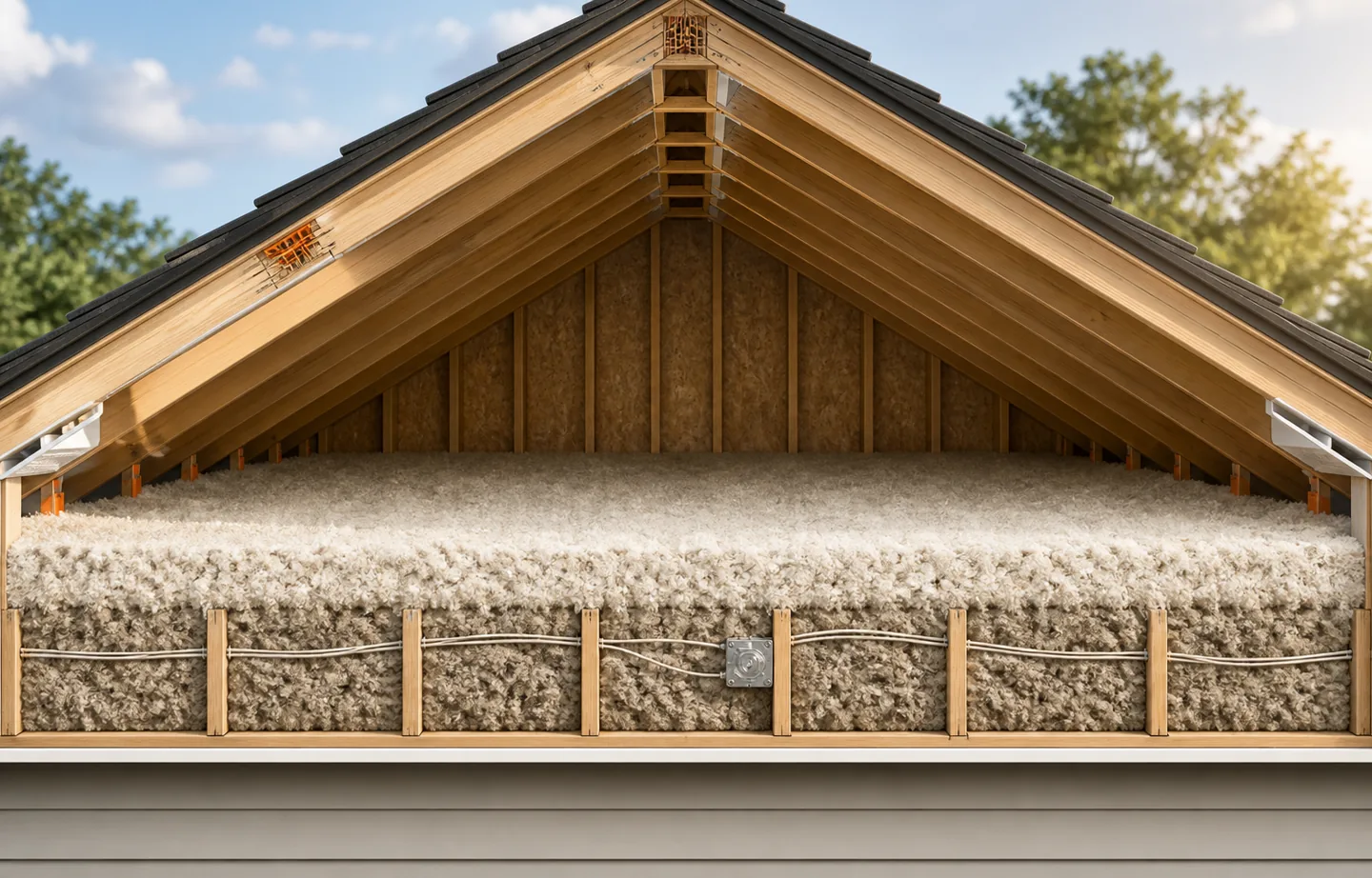
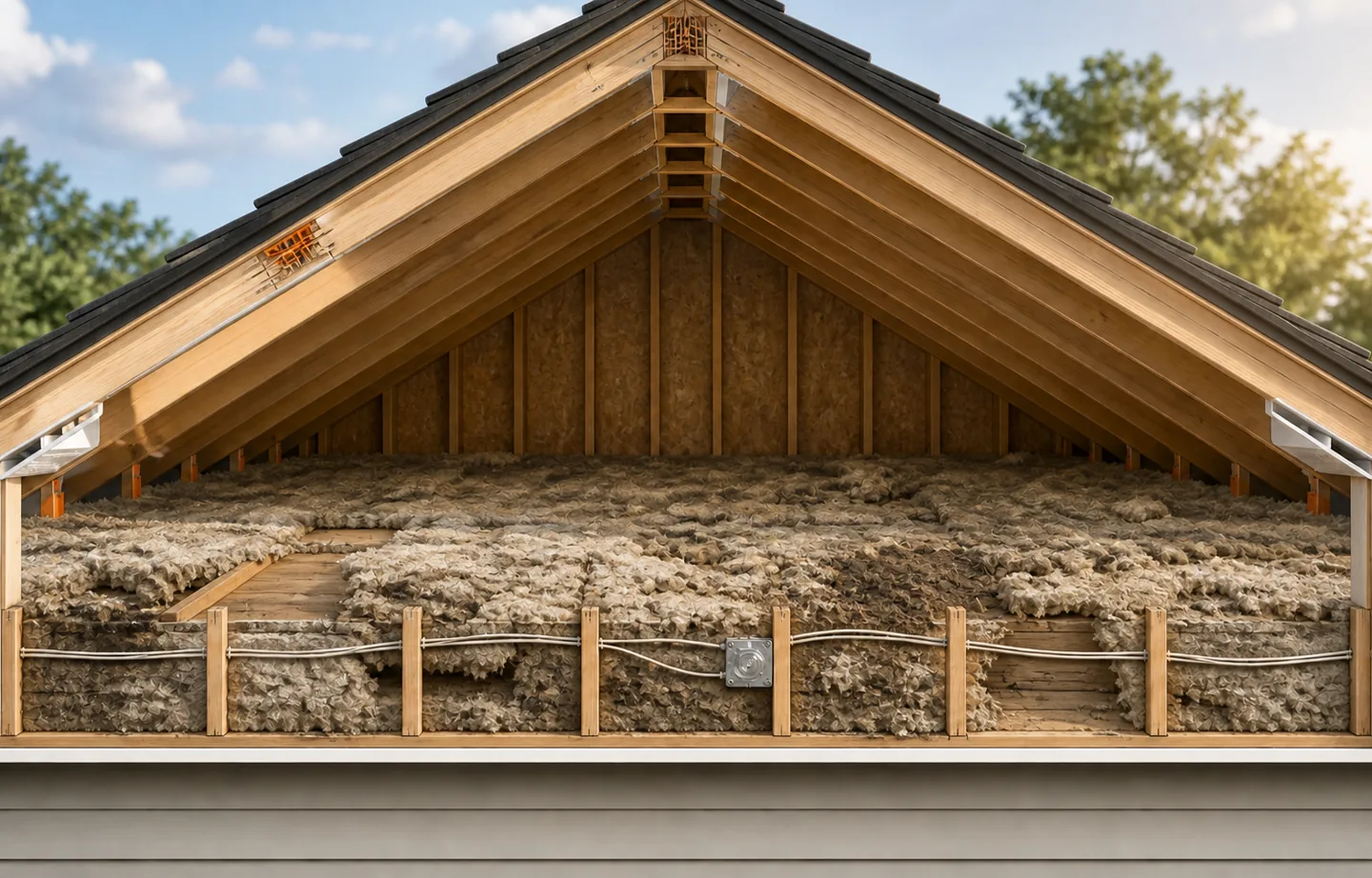
The answer depends on what is already in the attic. Choose a condition to see how the recommendation changes.
ADDING MORE MAY MAKE SENSE.
If the existing material is dry and usable, better coverage may be all the attic needs.
REMOVAL MAY MAKE MORE SENSE.
If the existing material is wet, contaminated, or damaged, the problem should not simply be buried.
WHAT TO EXPECT
WHAT HAPPENS DURING ABLOWN-IN INSULATION PROJECT?
WE INSPECT THE ATTIC
Existing insulation, attic access, ventilation, and anything that may affect the work.
WE EXPLAIN WHAT IT NEEDS
We show you what can stay, what needs attention, and what we recommend doing next.
WE PREPARE, INSTALL & CLEAN UP
We protect the access area, complete the approved preparation, install the insulation, check the coverage, and clean up.
WHAT AFFECTS THE COST? Attic size, access, existing material, removal or preparation needs, material choice, and the amount of insulation being installed.
MATERIAL OPTIONS
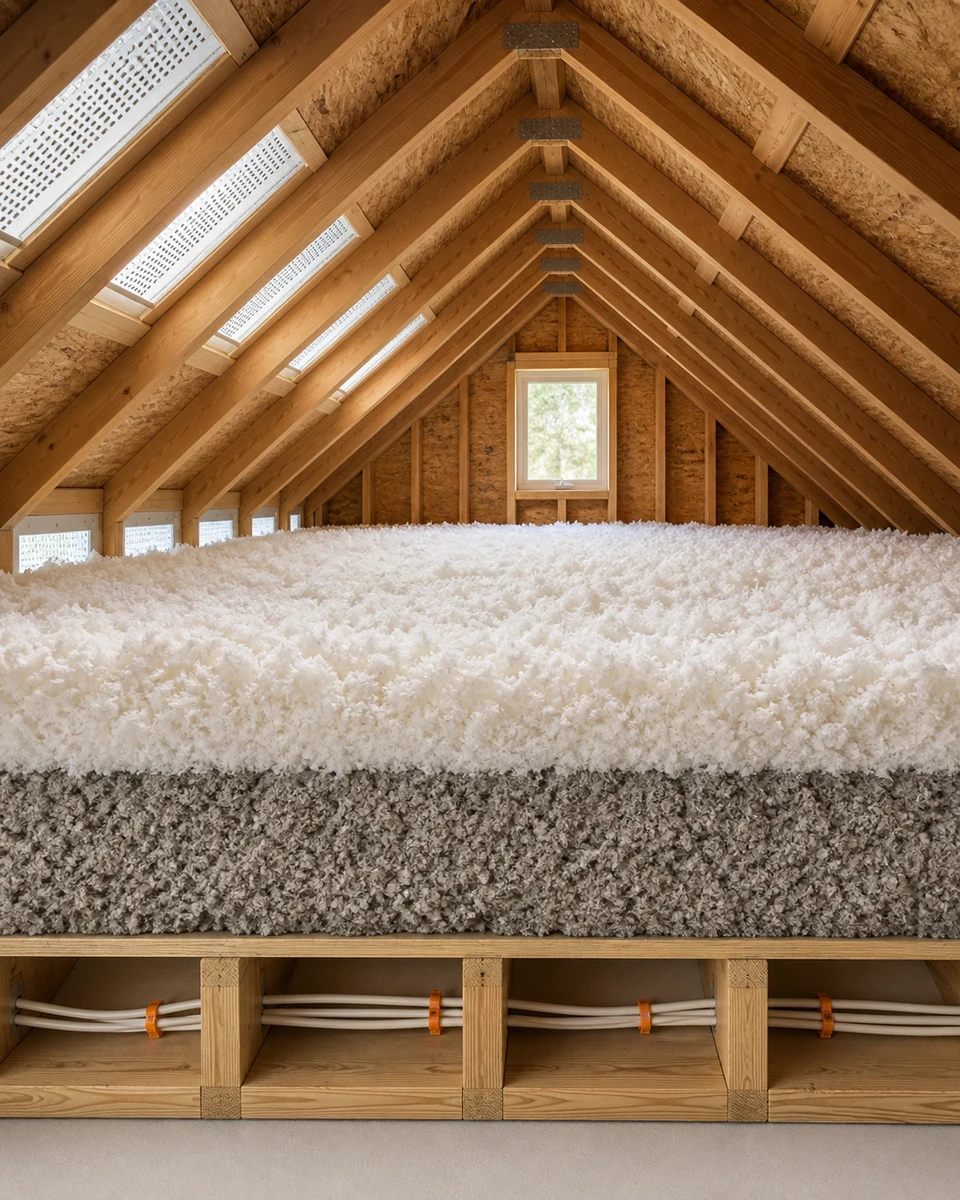
FIBERGLASS OR CELLULOSE?
R-value measures how strongly insulation resists heat moving through it. Both can work in the right attic. The exact rating depends on the product and how much material is installed.
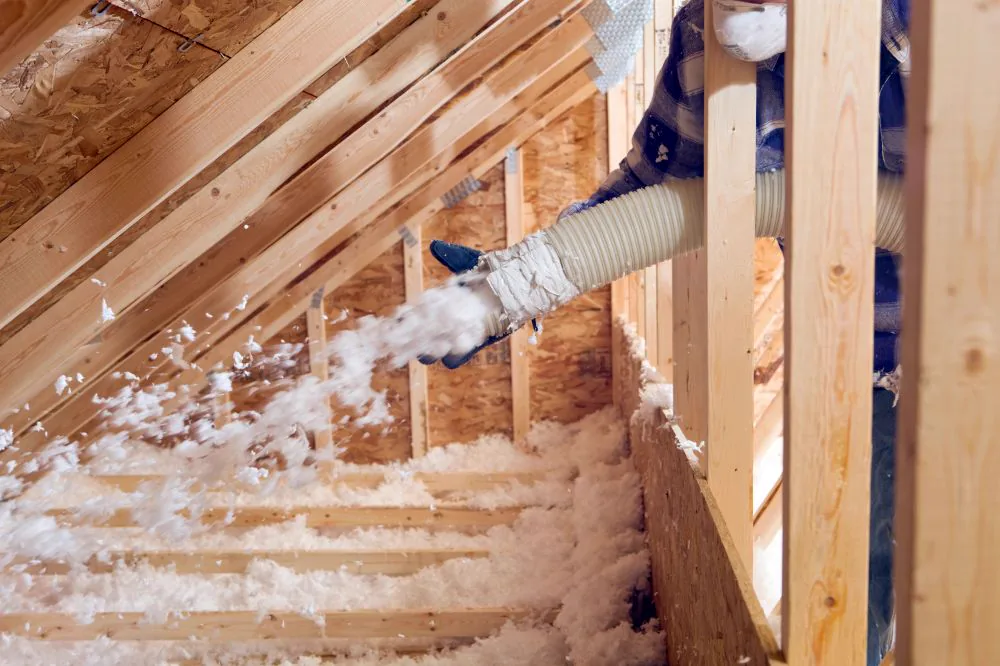
BLOWN-IN FIBERGLASS
Light, loose material made from glass fibers.
- TYPICAL R-VALUE
- The selected fiberglass product coverage chart defines the amount, installed depth and tested total R-value for the project.
- DEPTH MATTERS
- The chart printed on the bag tells the installer how much material and depth are needed for the planned total R-value.

CELLULOSE
Loose, gray material made mostly from recycled paper fibers.
- TYPICAL R-VALUE
- The selected cellulose product coverage chart defines the amount, installed depth and tested total R-value for the project.
- DEPTH MATTERS
- Some products call for extra installed depth to account for settling. The instructions printed on the bag control.
Comfort Shield checks the existing attic and follows the selected product instructions to determine the planned depth, coverage and tested total R-value.
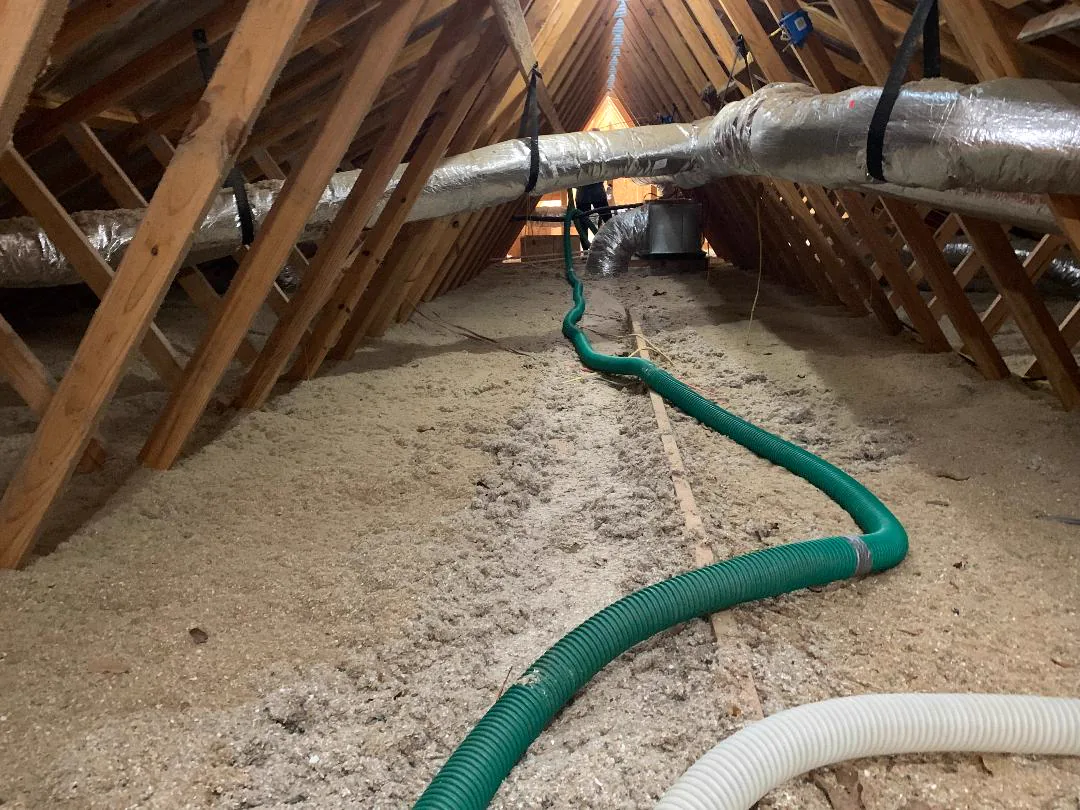
REAL COMFORT SHIELD WORK
SEE THE DIFFERENCE ONONE ACTUAL PROJECT.

COMMON QUESTIONS
WHAT HOMEOWNERS USUALLYWANT TO KNOW
Sometimes. If the existing insulation is dry, clean, and still usable, adding blown-in insulation over it may make more sense than removing everything.
Adding more may not be right if the old insulation is wet, damaged, contaminated, badly compressed, filled with debris, or covering a problem that needs attention first.
We inspect the attic, show you what we find, and explain whether adding more or removing the old material makes more sense.
Usually, yes, when reachable air leaks are present. Gaps around wires, pipes, framing, attic openings, and other areas are easier to seal before more insulation covers the attic floor.
We inspect the attic and explain which gaps can be safely reached and whether Air Sealing should be included.
A straightforward project that adds insulation over usable existing material can often be completed within one working day. Projects that include insulation removal, Air Sealing, baffles, repairs, difficult access, or other preparation may take longer.
We explain the expected schedule after inspecting the attic and confirming the work included.
Not always. Many blown-in attic projects can be completed while the homeowner remains in the house, especially when the attic has appropriate access and the work area can be isolated.
Occupancy requirements can change depending on the products being installed, how the attic is accessed, whether old insulation is being removed, and whether anyone in the home has specific sensitivities. We explain any access or occupancy requirements before work begins.
The main factors include attic size, access, the amount and condition of existing insulation, removal or preparation needs, Air Sealing, baffle or ventilation work, material choice, and the amount of insulation being installed.
After inspecting the attic, we explain what is included in the estimate and why we recommend it.
START YOUR BLOWN-IN ESTIMATE
TELL US WHAT YOUR ATTIC NEEDS.
Choose the answer that sounds closest. We will carry it into the full estimator, where you can check the details or change your answer.
- Blown-In Insulation is already selected
- Your answers will carry forward
- No contact information is required yet